Description
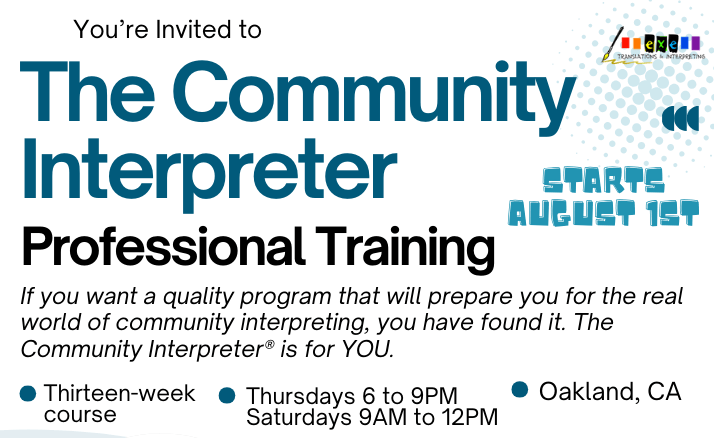
Live online 40-hour training; it is a prerequisite to register for the National Medical/Healthcare interpreter examination (NBCMI or CCHI). This course has a duration of 12 weeks with instruction on Thursdays from 6pm to 9pm and Saturdays from 3pm to 6pm.
Class starts March 14, 2026!
Fee for training and textbook $500, payable in one payment or installments (via PayPal).
Modules
Module 1
Includes introduction to the profession of medical interpreting, an overview and history of the profession, followed the credentials, testing and type of certification participants need to establish themselves as a professional in the field. Participants will also learn an introduction to a U.S. national code of ethics and how to apply those ethical principles to real-life situations. Students also engage in practice and self-assessment, critical areas for all practicing interpreters.
Module 2
Participants learn the skills and protocols necessary to conduct themselves as a professional medical interpreter by practicing:
- How to conduct themselves during the three stages and seven steps of the interpreted encounter,
- Basic protocols such as assignment, preparation, introductions, positioning, eye contact and use of first person,
- How to improve memory skills in order to interpret longer segments without interrupting,
- Message transfer skills that enhance accuracy such as chunking, parroting and paraphrasing,
- Modes of interpreting (consecutive, simultaneous and sight translation), and
- Fundamentals of the Rozan method for note-taking in consecutive interpreting.
Module 3
Addresses cultural competence and what to do when communication breaks down in the interpreting session. By the end of this section, participants will have learned advanced strategies for cultural mediation that will help facilitate meaningful cultural dialogue during the interpreting encounter. Some topics include:
- Assessing own unconscious bias as interpreter
- When and how to intervene
- Performing strategic mediation
- Cultural mediation for interpreters
Module 4
Covers the role of the interpreter and how they fit into the profession. Participants will know what it means to be a professional interpreter and how they conduct themselves to honor and uphold this important profession by understanding how to make decisions about role boundaries, advocacy for community and medical interpreters, following interpreting standards of practice, interpreter self-care, performing legal interpreting in medical and community settings, and how to be a professional interpreter.
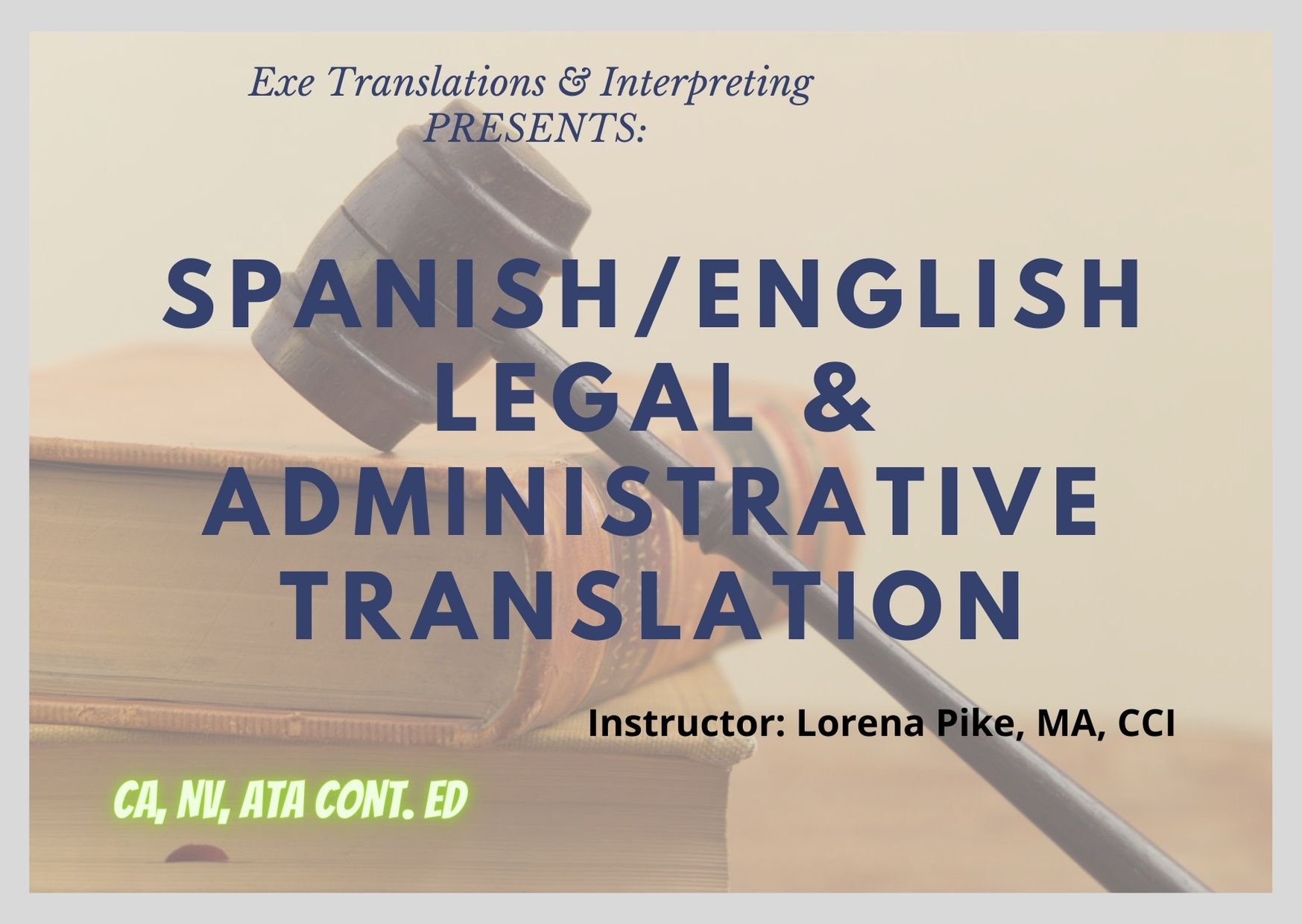
Instructor: Lorena Pike, MA, CCI